News
Algorithmic management, AI, and the future of collective bargaining: CELSI presents research at Hungarian trade union seminar
Algorithmic management, AI, and the future of collective bargaining: CELSI presents research at Hungarian trade union seminar
Published on May 19, 2026
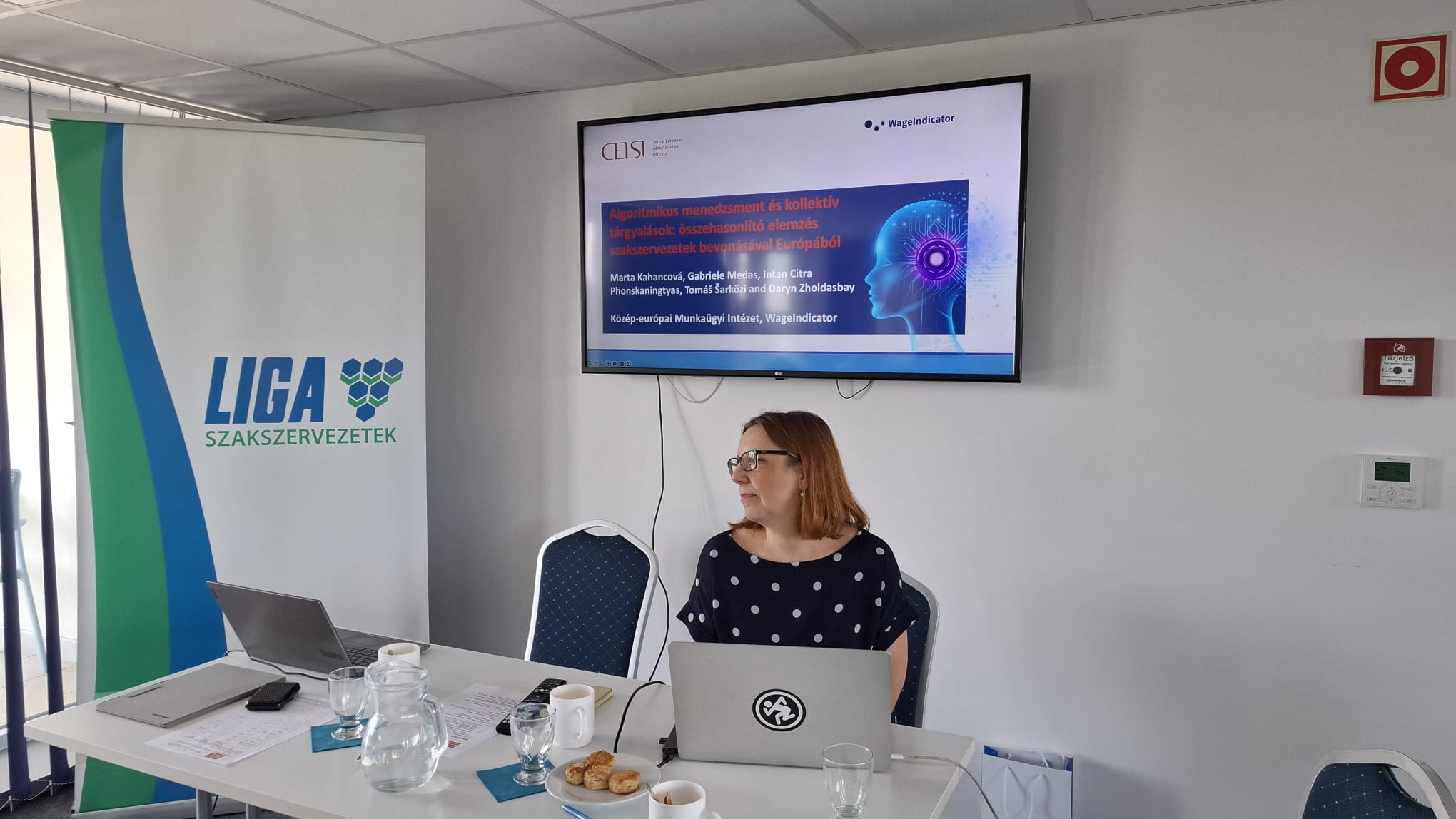
How are trade unions responding to the growing use of artificial intelligence and algorithmic management in the workplace - and what role can collective bargaining play in shaping that response?
On 14 and 15 May 2026, CELSI Managing Director Marta Kahancová presented research findings at the seminar "Artificial Intelligence: Survival Toolkits for Trade Unions", organised by the Hungarian LIGA Trade Unions (Democratic Confederation of Independent Trade Unions) and the Budapest office of Friedrich-Ebert-Stiftung, held in Velence, Hungary.
The two-day seminar brought together trade union representatives, labour lawyers, researchers, and AI experts to discuss how artificial intelligence and algorithmic systems are transforming work and employment relations.
Topics included algorithmic decision-making, platform work, labour law, workers' protection, and the growing influence of AI on working conditions.
The CELSI presentation highlighted how collective bargaining is increasingly becoming a key regulatory instrument for governing technological innovation in the workplace.
Drawing on a cross-European comparison of collective agreements, the research mapped emerging bargaining strategies, identified gaps in workers' protection, and underscored the central role of social partners in ensuring meaningful worker voice in the deployment of AI and data-driven technologies.
The analysis pointed to significant sectoral and national differences across Europe in how these challenges are addressed, reinforcing the case for stronger social dialogue frameworks.
Particular attention was given to agreements covering AI-related training, employee involvement in technology implementation, data and privacy protection, and the effects of algorithmic management on working time and work organisation.
The presentation also featured a comparative case study on AI in collective bargaining in Slovakia and Italy, conducted by Daryn Zholdasbay as part of his diploma thesis research at the Institute of Public Policy, Faculty of Social and Economic Sciences, Comenius University Bratislava.
The research was prepared in collaboration with WageIndicator Foundation researchers Gabriele Medas and Intan Citra Phonskaningtyas, CELSI researchers Tomáš Šarközi, and Daryn Zholdasbay, in cooperation with the Friedrich-Ebert-Stiftung Competence Centre and UNI Europa.
The presentation sparked wide interest among the audience and was met with an engaged discussion. Thank you to LIGA Trade Unions and Friedrich-Ebert-Stiftung Budapest for the invitation and organisation.
#CELSI #MartaKahancova #ArtificialIntelligence #AlgorithmicManagement #CollectiveBargaining #SocialDialogue #FutureOfWork #LabourMarket #TradeUnions #Hungary